Illuminated Joinery: The Wardrobe as Light Sculpture
In luxury residential design, the master wardrobe is no longer a space of mere utility. It is becoming an architectural element of light, atmosphere, and curated display.
The traditional master suite wardrobe presents a fundamental design paradox: how to accommodate vast storage needs without creating an oppressive, monolithic volume. Reject the premise that storage must be concealed. Instead, we propose a new paradigm where joinery transcends its utilitarian function to become a primary source of ambient light and a defining architectural feature, transforming the daily ritual of dressing into an elevated, atmospheric experience.
Design Intent
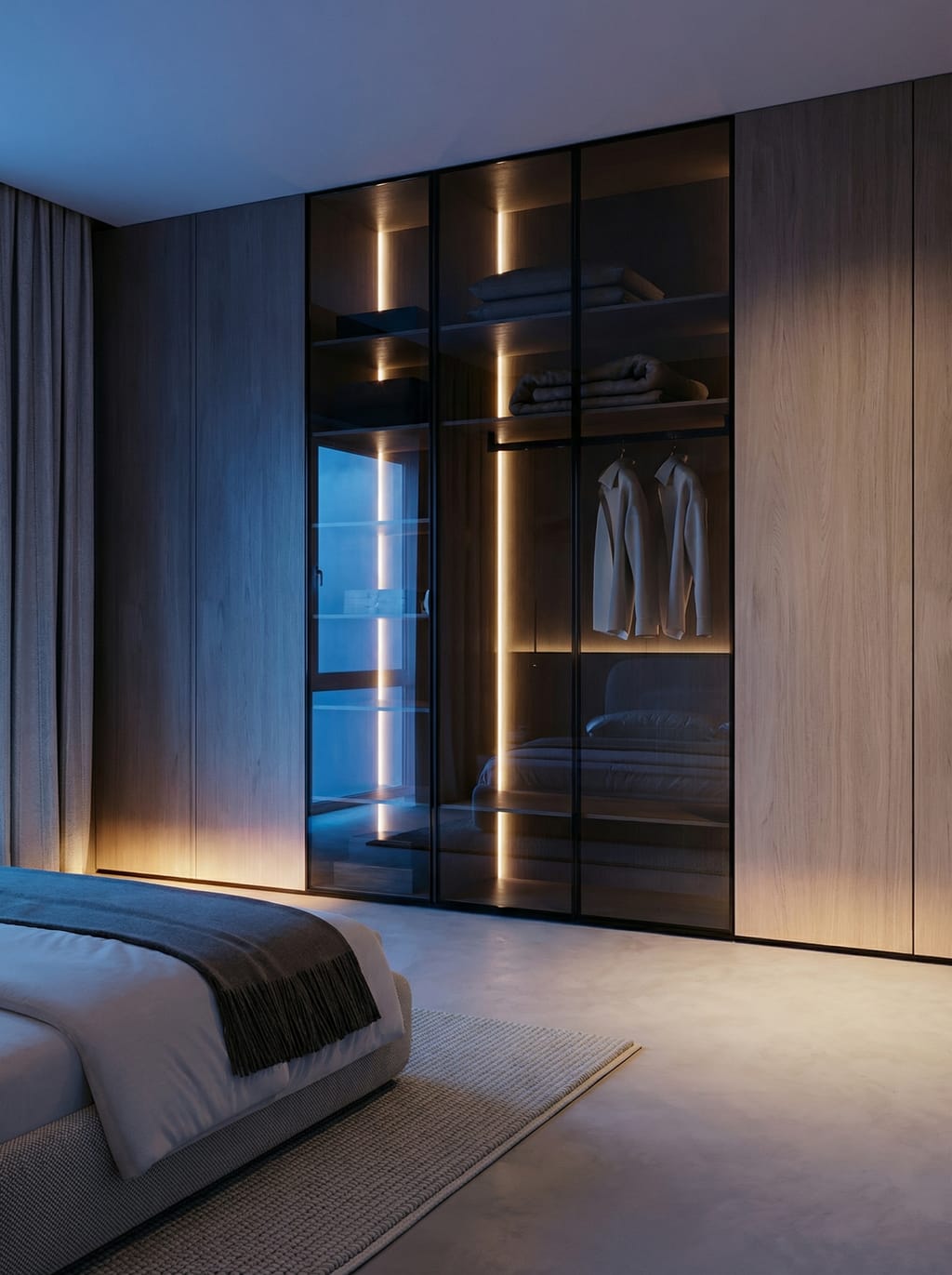
The central design move was to dematerialize the wardrobe. Rather than a solid mass, we envisioned it as a series of illuminated vitrines, borrowing from the language of high-end retail and gallery displays. The objective was to challenge the opaque boundary between storage and living space. By making the wardrobe’s contents a curated exhibit behind glass, we encourage a level of organization that elevates personal effects into an art form. This approach visually expands the perceived depth of the master suite, turning a functional necessity into a focal point that establishes a serene, boutique hotel-like mood.
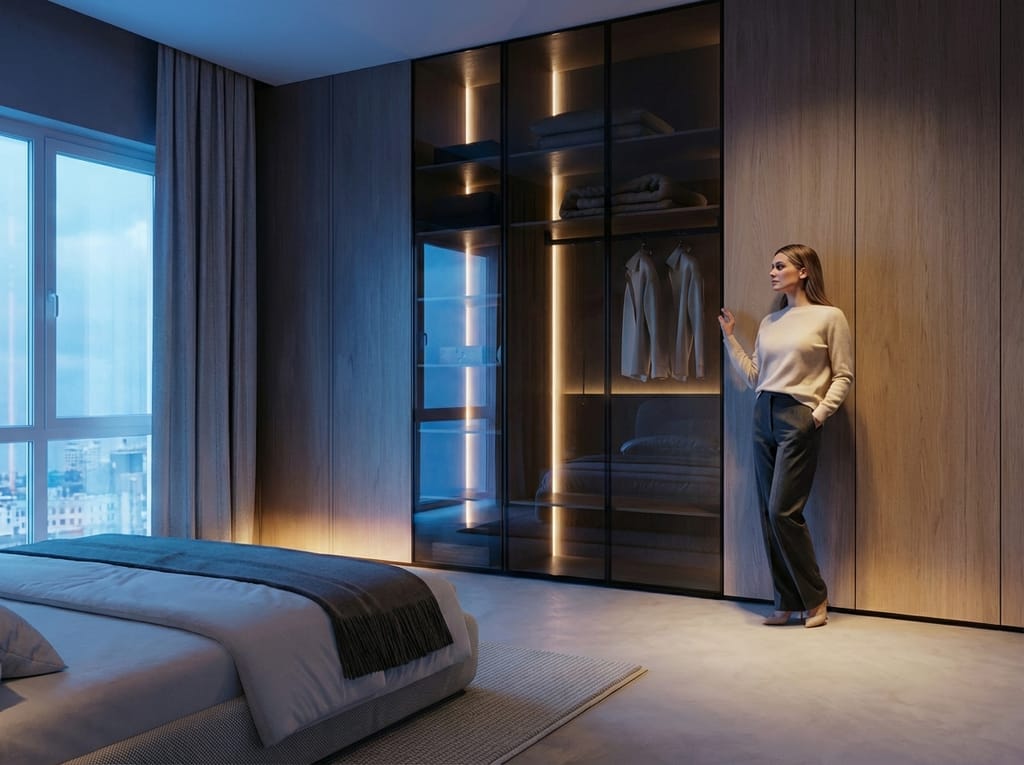
True luxury isn't about hiding your life away; it's about creating an extraordinary backdrop for its daily rituals.
Material Palette
The material selection is a study in deliberate contrast. The casework is crafted from rift-sawn oak, stained to a deep, resonant tone that grounds the space and absorbs light. Its rich, tactile grain provides a necessary organic counterpoint to the sleek industrialism of the fenestration. The doors feature floor-to-ceiling panels of translucent, low-iron glass framed in slender, matte black powder-coated steel. Critically, the integrated lighting system uses vertical LED strips with a warm, 2700K color temperature, ensuring the illumination feels inviting and renders clothing colors accurately, avoiding the cold, clinical feel of lesser systems.
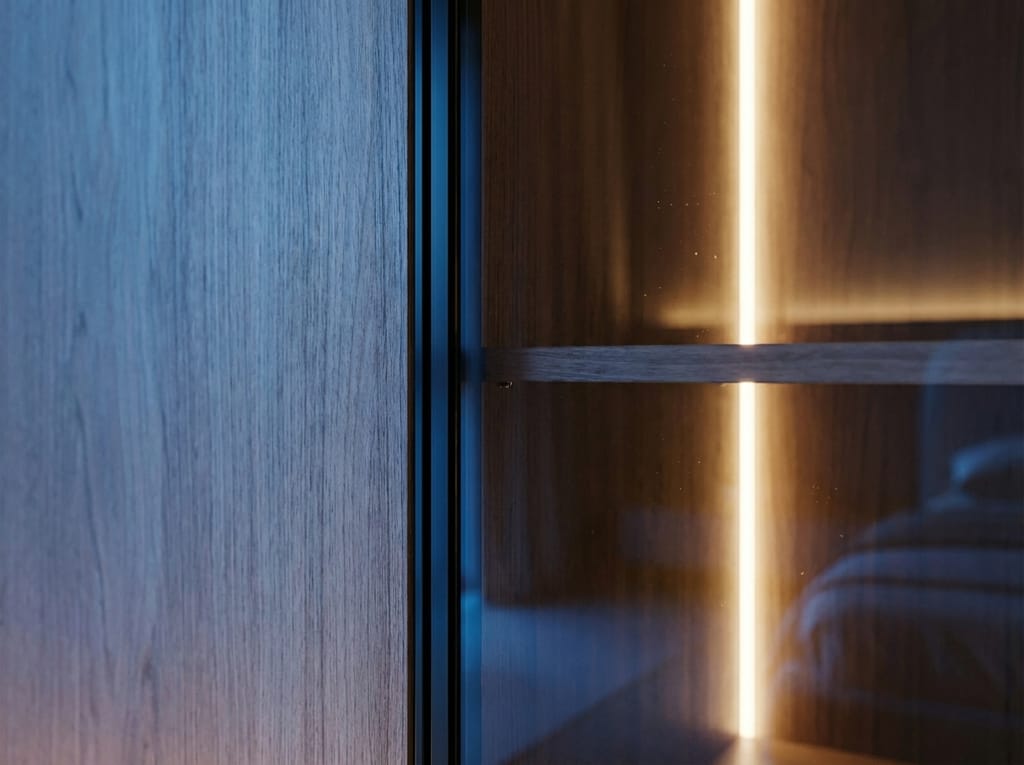
The dialogue between the raw timber grain and the cool precision of the steel is where the design finds its tension and its soul.
Spatial Experience
The effect on the room's atmosphere is profound. During the day, the glass fronts capture and reflect ambient light, preventing the joinery from feeling heavy. In the evening, the wardrobe becomes the room's primary light source—not for task illumination, but for mood. It emits a soft, ethereal glow that suffuses the entire master suite, creating a calming, decompression zone. The act of selecting an outfit is transformed from a mundane task into a moment of quiet contemplation, framed by the warm verticals of light. This isn't just a closet; it's an environment engineered for tranquility.
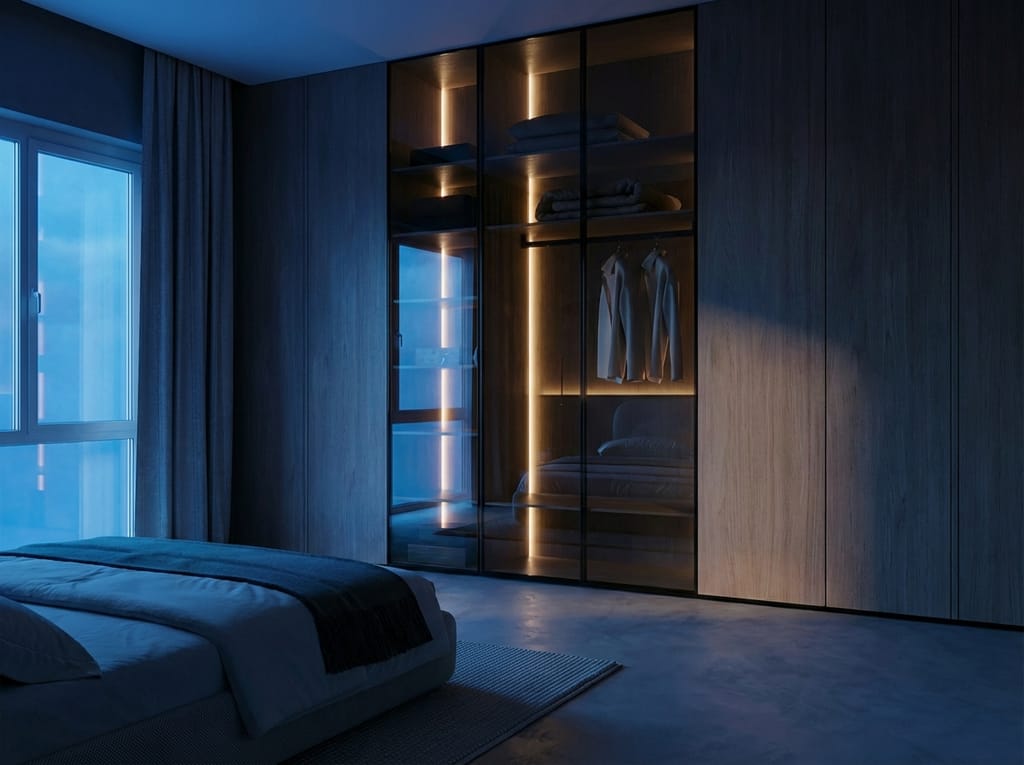
We asked: can a wardrobe do more than just store things? Can it shape the emotional tenor of a room? The answer is unequivocally yes.
By treating joinery as an active architectural element rather than a passive container, we unlock new possibilities for residential design. The illuminated wardrobe demonstrates that the most private, functional spaces hold the greatest potential for emotional resonance. It is a testament to a simple philosophy: that thoughtful design can elevate the simple, repetitive acts of daily life into moments of beauty and calm. It proves that the ultimate luxury is not the object itself, but the atmosphere it creates.