Beyond Drywall: The Architectural Kitchen Envelope
For years, the white kitchen stood as the undisputed archetype of luxury. We propose a new grammar—one where the entire architectural envelope becomes an immersive, tactile experience.
There is a palpable fatigue with the sterile, high-gloss kitchen—a space treated as a pristine showroom rather than the vital center of domestic life. The prevailing design problem is not one of function, but of feeling. In response, we are moving beyond surface-level finishes to explore the concept of the complete architectural envelope. This project’s driving idea is to wrap the kitchen’s entire volume in a single, warm material, challenging the default separation of wall, ceiling, and casework. By treating these elements as a continuous plane of custom millwork, we solve for the lack of soul, creating a space that feels carved and cohesive, not merely decorated.
Design Intent
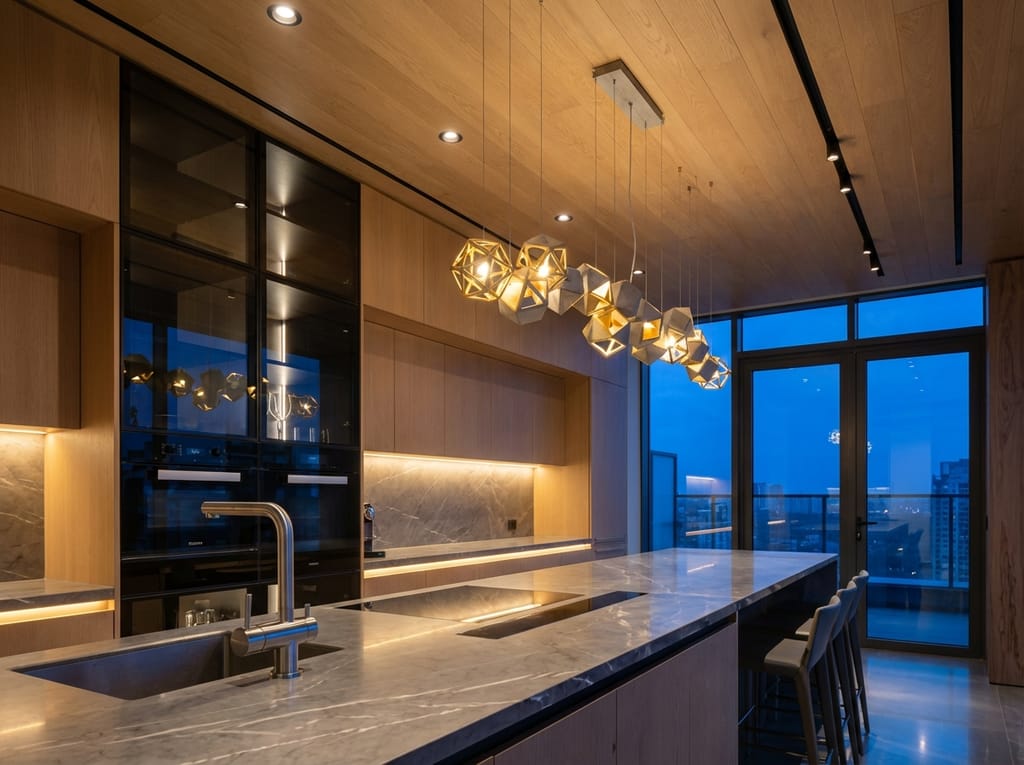
The conceptual framework for this space was a direct counter-response to the expansive, open-plan volumes common in contemporary coastal homes. Instead of celebrating sheer scale, the intent was to create a zone of intimacy and psychological comfort. The primary design move was to clad not only the vertical surfaces but also the ceiling in honey-toned oak. This decision effectively lowers the room's visual center of gravity, establishing a profound sense of grounding. It’s a strategy that borrows from the tradition of wood-paneled libraries, reinterpreting that sense of quiet sanctuary for the home's most active hub. The parti is simple: a monolithic, material cocoon that prioritizes atmospheric quality over ostentation.
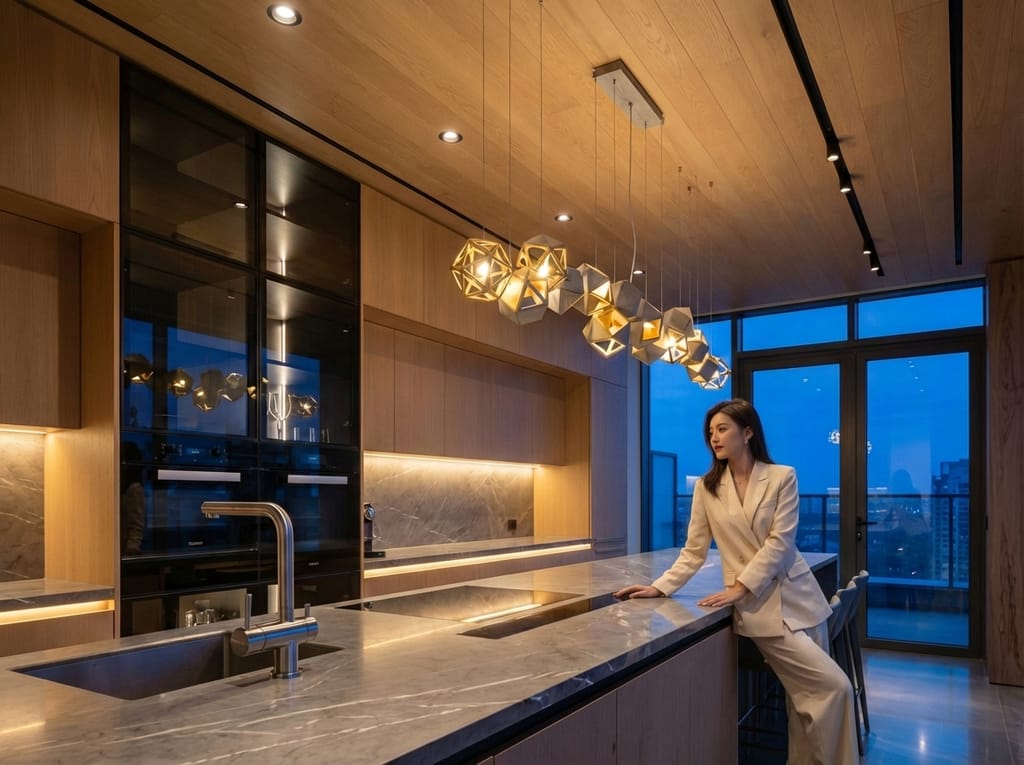
We aren't just building kitchens; we are crafting emotional experiences and curating spaces that feel collected, not just constructed.
Material Palette
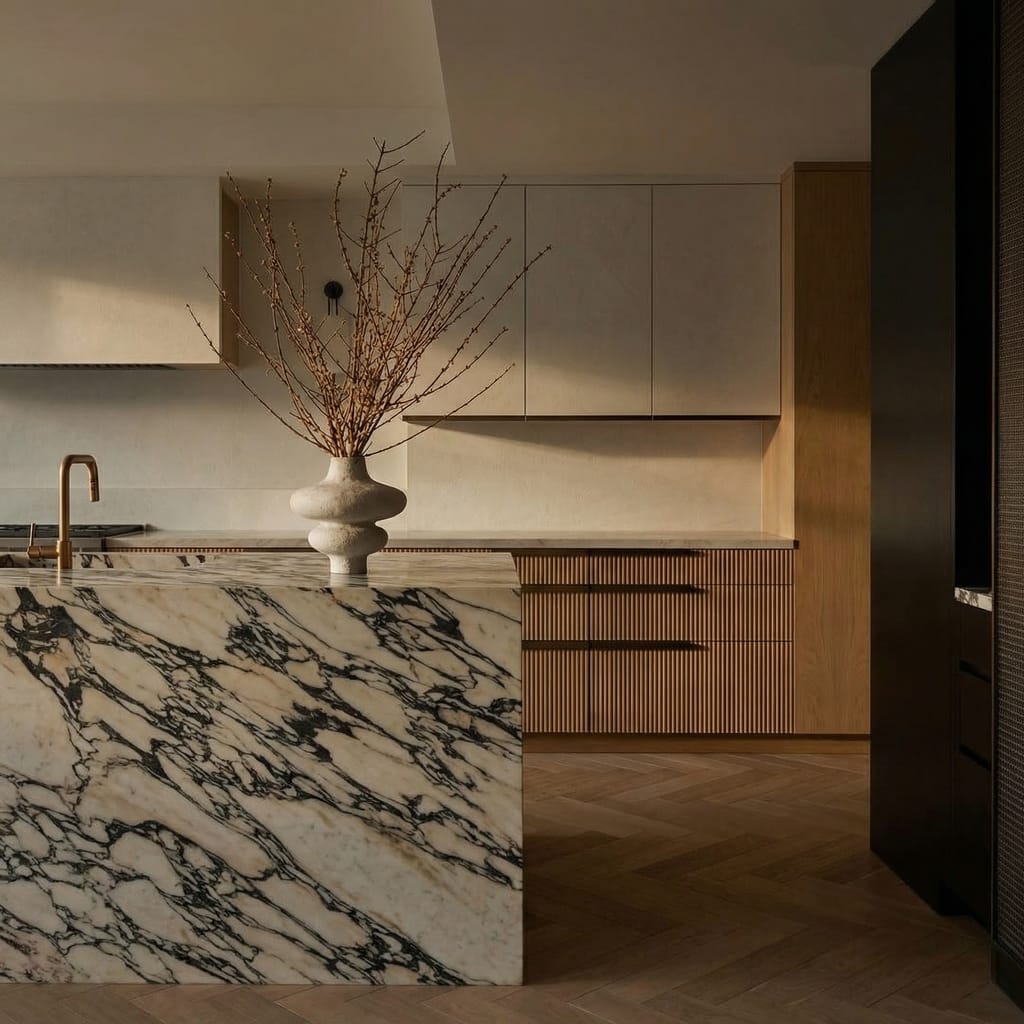
The material selection is a study in deliberate contrast. The primary element is rift-sawn white oak, selected for its consistent vertical grain that enhances the sense of height before wrapping overhead. This extensive use of timber demanded exacting joinery to ensure seamless transitions from cabinetry to ceiling panels. This warm, tactile envelope is pierced by a cool, monolithic island of book-matched Calacatta marble with a waterfall edge, its dramatic veining providing a moment of organic pattern. To balance the wood's warmth, certain upper cabinets feature black glass, creating pockets of depth and reflection. Illumination is treated sculpturally; a geometric pendant acts as a sharp, metallic counterpoint to the soft rectilinearity of the millwork—less a fixture, more 'jewelry for the room.'
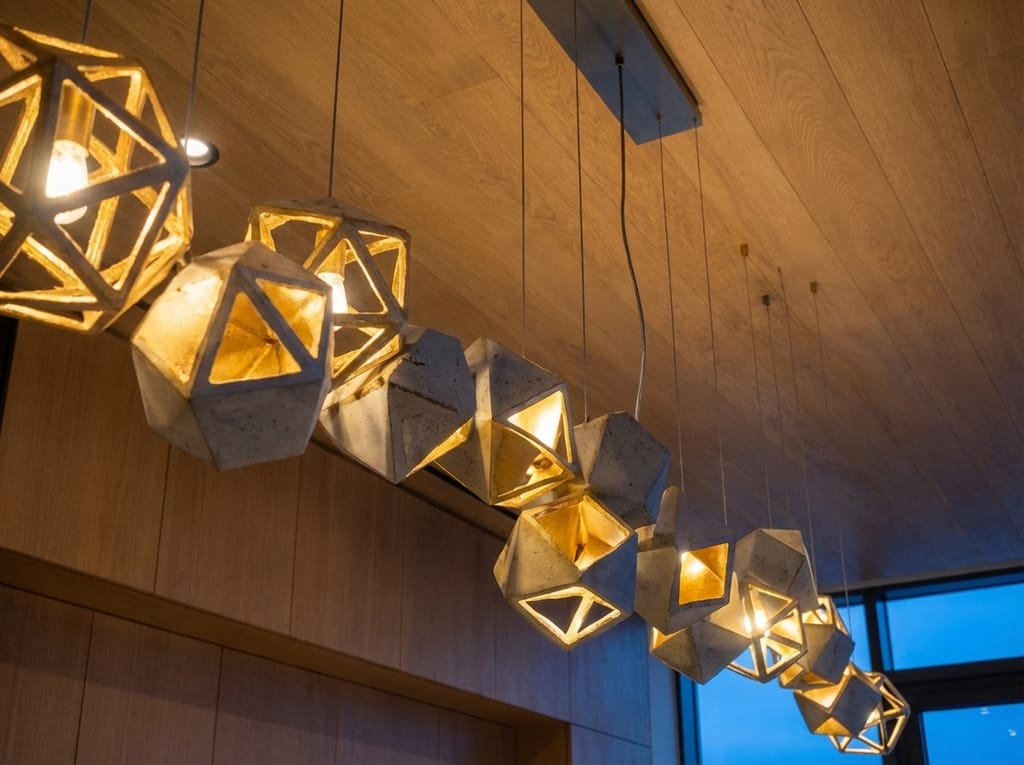
It is a rejection of the generic in favor of the bespoke, where every joint and grain direction is considered.
Spatial Experience
The performance of this space transcends its function. Acoustically, the wood-clad volume is softer and quieter than a conventional kitchen of drywall and stone, absorbing sound and encouraging conversation. The quality of light is transformative. Throughout the day, natural light from the expansive fenestration plays across the timber grain, animating the surfaces. However, the space truly reveals its character during the transitional moments of twilight. As the cool, blue light of the evening floods in from the skyline, the interior oak glows with an intense, ember-like warmth. This calculated interaction between natural and artificial light creates a dynamic, moody environment that adapts with the rhythm of the day, making the kitchen a destination at all hours.
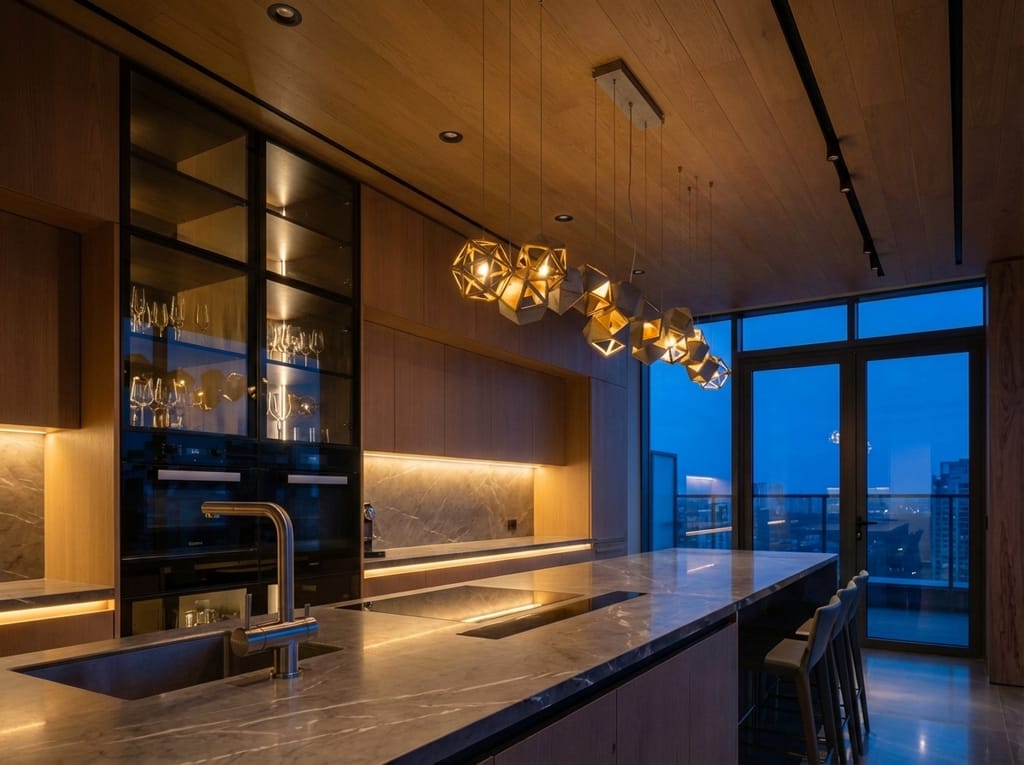
The interplay between the warm timber and the cool, natural light of the blue hour isn't accidental; it is a calculated study in atmospheric architecture.
To envelop a kitchen in wood is more than a material choice; it is a philosophical one. It signals a departure from spaces designed to be viewed and a return to spaces designed to be felt. This approach treats the kitchen not as a collection of appliances and cabinets, but as a singular, cohesive architectural volume. In an era of digital dislocation, the ultimate luxury may be the provision of authentic, grounding environments. By wrapping the room, we create a sanctuary—a space that holds its inhabitants, offering a quiet, material richness that no amount of polished stone can replicate.