The Monolithic Kitchen: Gravity, Grace, and Light
Where many see darkness as a void, we see it as an anchor. This is the story of a kitchen that uses monumental mass to celebrate California light.
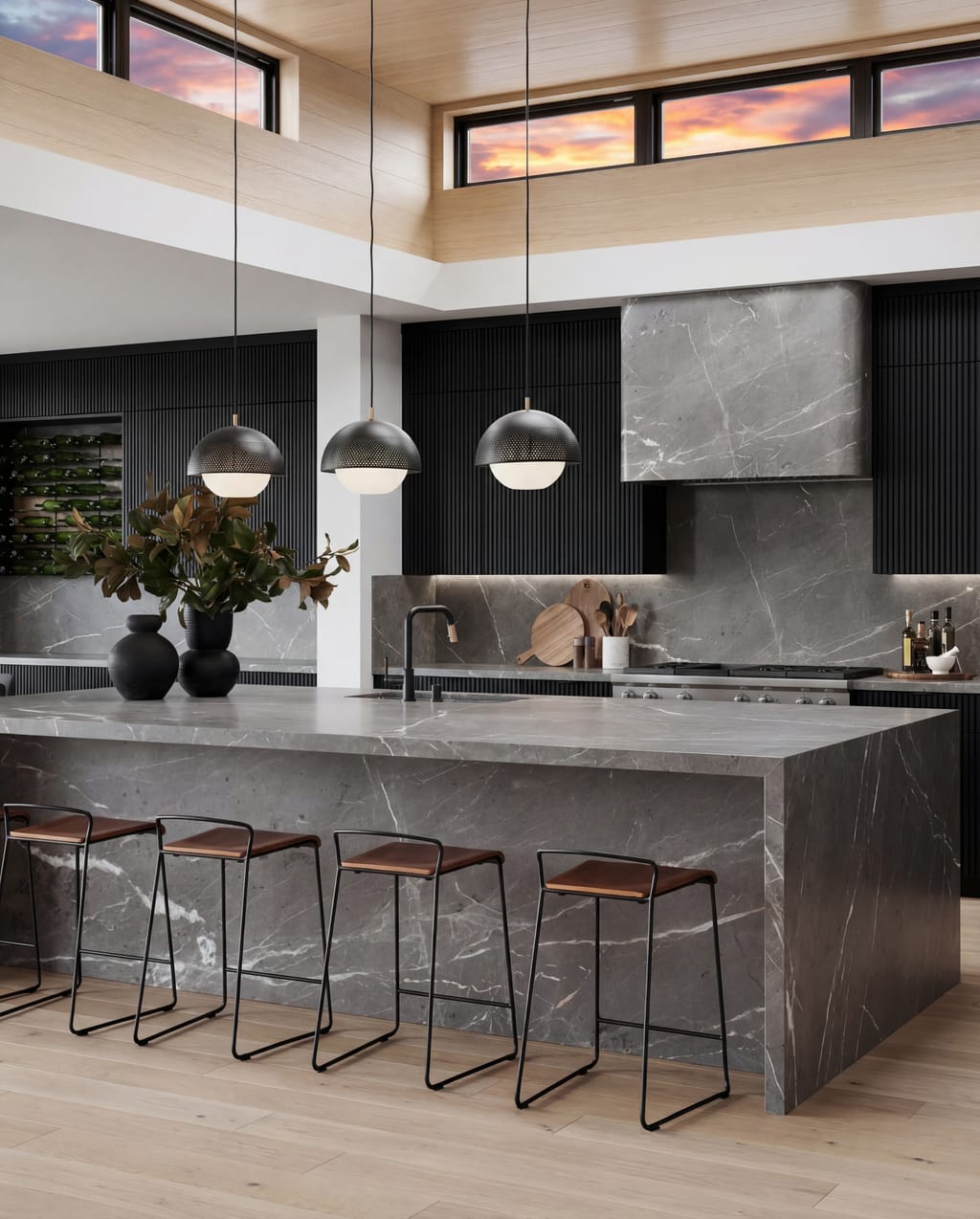
The prevailing narrative of the luxury kitchen has long been one of ethereal lightness—a symphony of white marble and pale woods. We chose to challenge this convention. The design problem wasn't a lack of space or light, but rather how to command a voluminous, high-ceilinged room without it feeling unmoored. The driving idea was to introduce a powerful, grounding element—a monolith—that would not only anchor the space but also act as a canvas, making the incoming natural light a more considered, dramatic event. This kitchen is conceived not as a mere prep station, but as a primary social hub, an atmospheric sanctuary for entertainment that balances monumental presence with intimate warmth.
Design Intent
The conceptual framework began with the client’s brief for an 'Entertainment Sanctuary'—a space with the gravitas of a private lounge but the functionality of a high-performance kitchen. Sited in Newport Beach, the architecture offered soaring ceilings and the opportunity for high-level fenestration. Our primary design move was to counteract this verticality with a strong horizontal anchor. The parti centers on the monolithic island, a gravitational force around which all other elements—circulation, function, and light—are organized. This is a direct response to the ubiquitous 'open-concept' space that often lacks focus. Here, the island provides that focus, creating a clear hierarchy and allowing the eye to rest before traveling upward to the warm, wood-clad ceiling and the clerestory windows framing the sky.
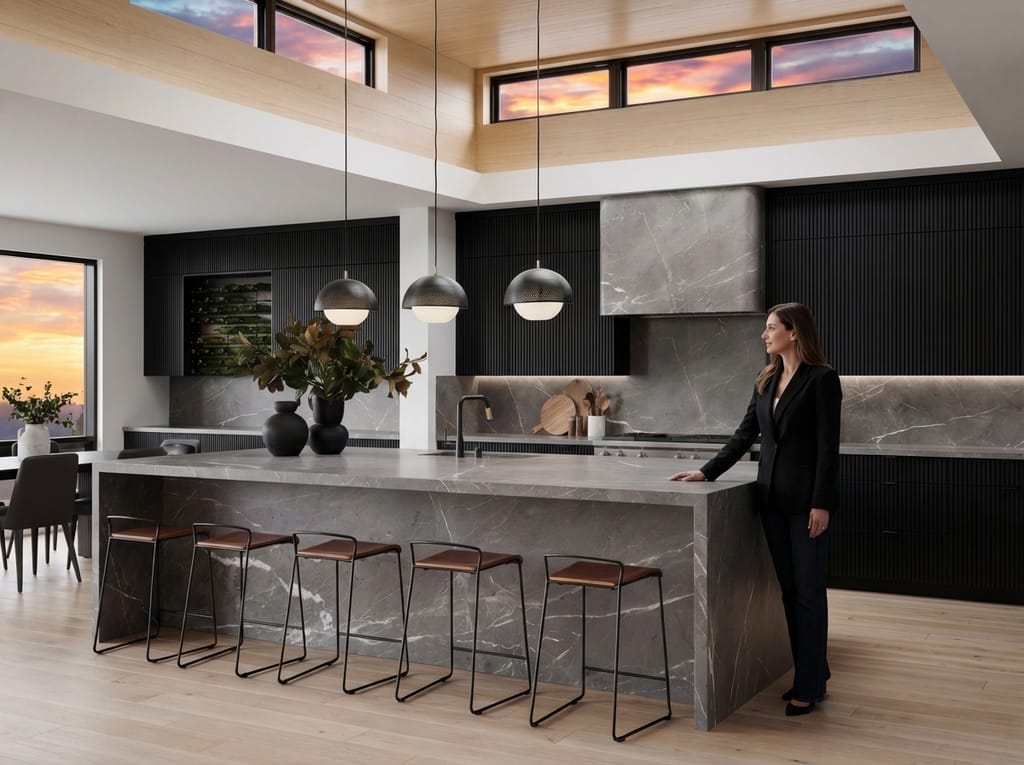
True luxury isn't about brightness; it's about balance and the deliberate command of shadow.
Material Palette
The material selection is a study in controlled contrast. The island is wrapped in a continuous skin of Pietra Grey marble, its deep charcoal field traced with fine, crystalline white veins. The waterfall edges required precise book-matching, ensuring the stone’s veining flows uninterrupted across the planes, treating the mass as a single sculptural object. To complement this, we specified custom matte black fluted cabinetry. The vertical reeding creates a subtle play of light and shadow, adding textural depth that prevents the dark palette from feeling flat or oppressive. Overhead, the ceiling is clad in rift-sawn white oak, its tight, linear grain providing warmth and directionality, a natural counterpoint to the sedimentary stone below.
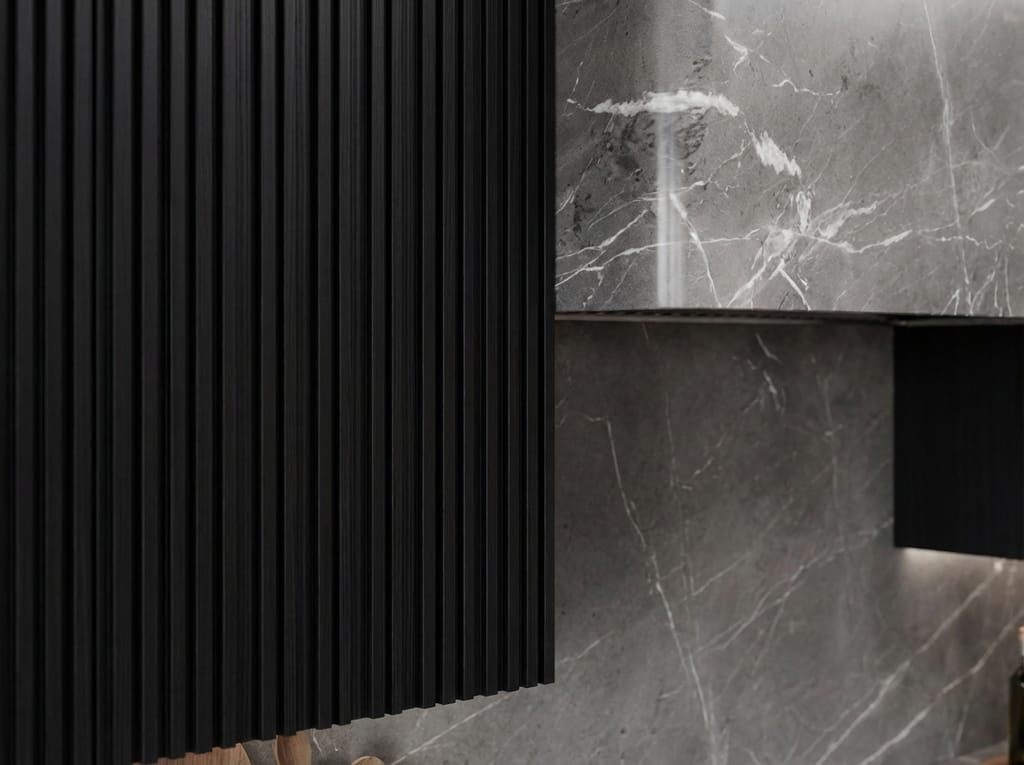
The island isn't just a block of stone; it's a tailored object where every vein was considered a brushstroke.
Spatial Experience
The performance of the space is dictated by the dialogue between mass and light. Throughout the day, the clerestory windows capture the shifting California sun, casting dynamic patterns across the fluted casework and the oak ceiling. During the golden hour, the sunset ignites the room, and the polished marble island reflects this warmth not with a harsh glare, but a deep, moody glow. The monolith itself defines circulation, creating generous pathways for a host to move during a catered event while allowing guests to congregate without disrupting flow. The combination of hard stone and soft wood creates a balanced acoustic environment, absorbing the clatter of entertainment and fostering a sense of cloistered calm.
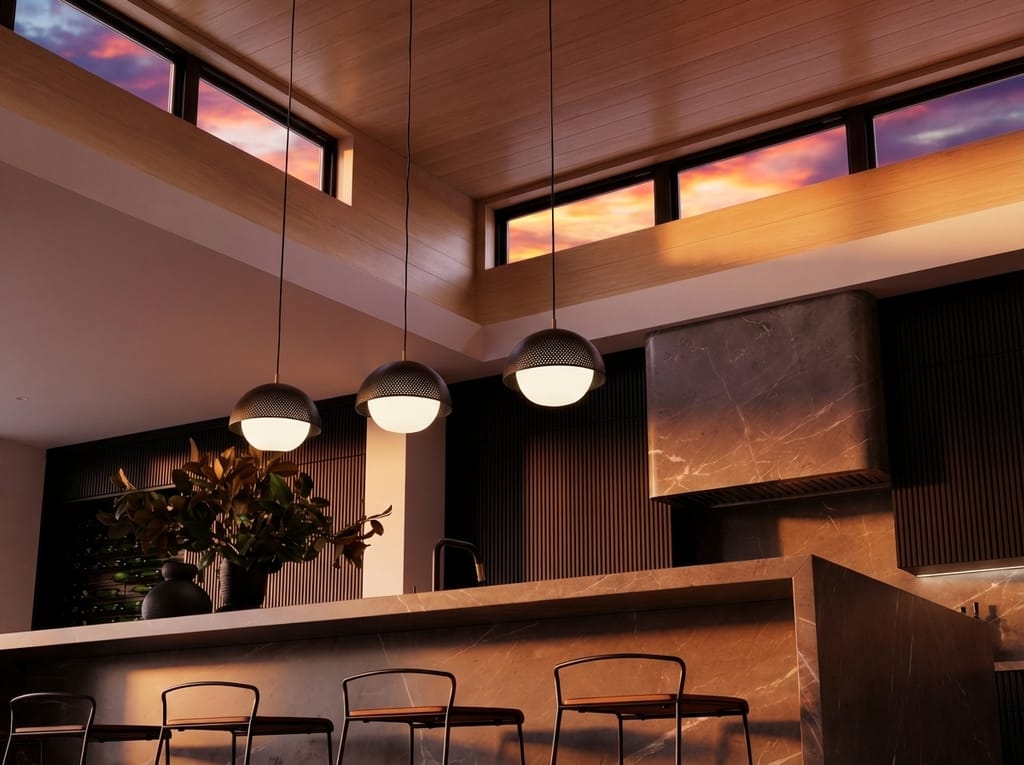
The dense, charcoal stone doesn't swallow the light—it gives it a surface to land on, to be held.
This project proposes that weight and darkness are not limitations, but powerful tools for shaping experience. By embracing a monolithic form, we created a kitchen that feels both permanent and alive—a space anchored in the earth yet fully open to the sky. It moves beyond the trend of the moment to touch on a more timeless idea of sanctuary: a space that holds its inhabitants, commands respect through its materiality, and proves that the most profound sense of luxury is found not in sheer brightness, but in depth, substance, and expertly calibrated light.