The Detail Index · Living Space
Beyond Walls: The Art of Invisible Architecture
In contemporary luxury design, the most profound statement is often the one that goes unseen. We explore the architectural rigor and obsessive craft required to make a wall disappear, revealing the art of the perfectly integrated jib door.
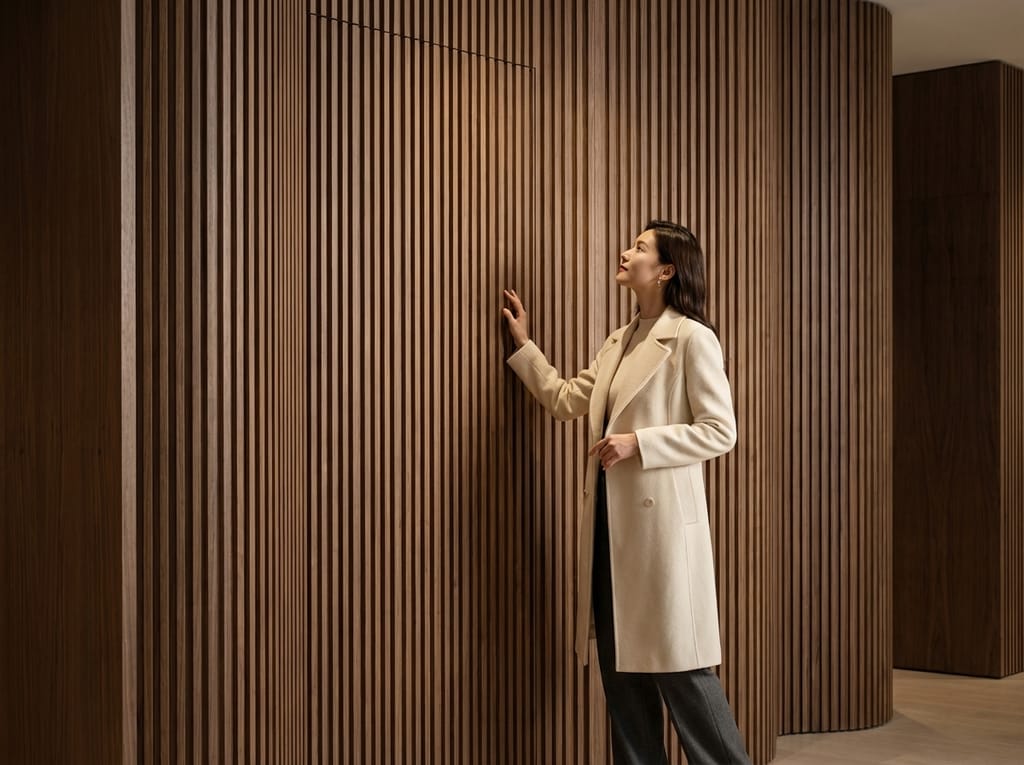
The prevailing narrative of modern architecture often champions openness and unbroken sightlines. Yet, within this expansive ethos lies a quiet counterpoint: the need for seclusion, acoustic privacy, and spatial surprise. The jib door, an architectural element with centuries of precedent, answers this need not with an interruption, but with seamless integration. Its success is not measured by its presence, but by its convincing absence. Achieving this illusion demands more than clever concealment; it requires a deep collaboration between architectural intent and masterful execution, where the integrity of a single, continuous surface becomes the project's central challenge.
Design Intent: The Pursuit of the Unbroken Plane
The conceptual drive for an invisible door stems from a desire for monolithic surfaces. In spaces defined by rhythmic wood paneling, book-matched stone, or hand-troweled plaster, a conventional door frame is a discordant note. The design intent is to preserve the purity of a plane, allowing material to be the primary expression. This approach is particularly resonant in minimalist or Japandi-influenced interiors, where visual calm is paramount. The problem to be solved is dual-faceted: providing necessary passage and privacy while upholding the architectural concept of an uninterrupted volume. The door ceases to be a portal and becomes a kinetic panel, a moving part of the wall itself.
The ultimate luxury isn't what you add to a space, but what you can seamlessly take away.
Material & Mechanism: The Engineering of Invisibility
Execution hinges on two domains: material continuity and mechanical precision. For a slatted wood wall, this means selecting lumber from the same flitch to ensure consistent grain and color, then meticulously milling each piece so the pattern continues unbroken across the door leaf and surrounding casework. The structural framing must be engineered to be exceptionally rigid, preventing any sag that would compromise the hair’s-breadth reveals. The hardware is the unseen engine: high-load capacity concealed hinges (such as those by Soss or Sugatsune) or offset pivot systems become critical specifications. Closure is managed by magnetic touch latches or concealed roller bolts, eliminating the need for any visible hardware. Every detail, from the negative edge reveal to the substrate stability, is calculated to maintain the illusion against the forces of time and use.
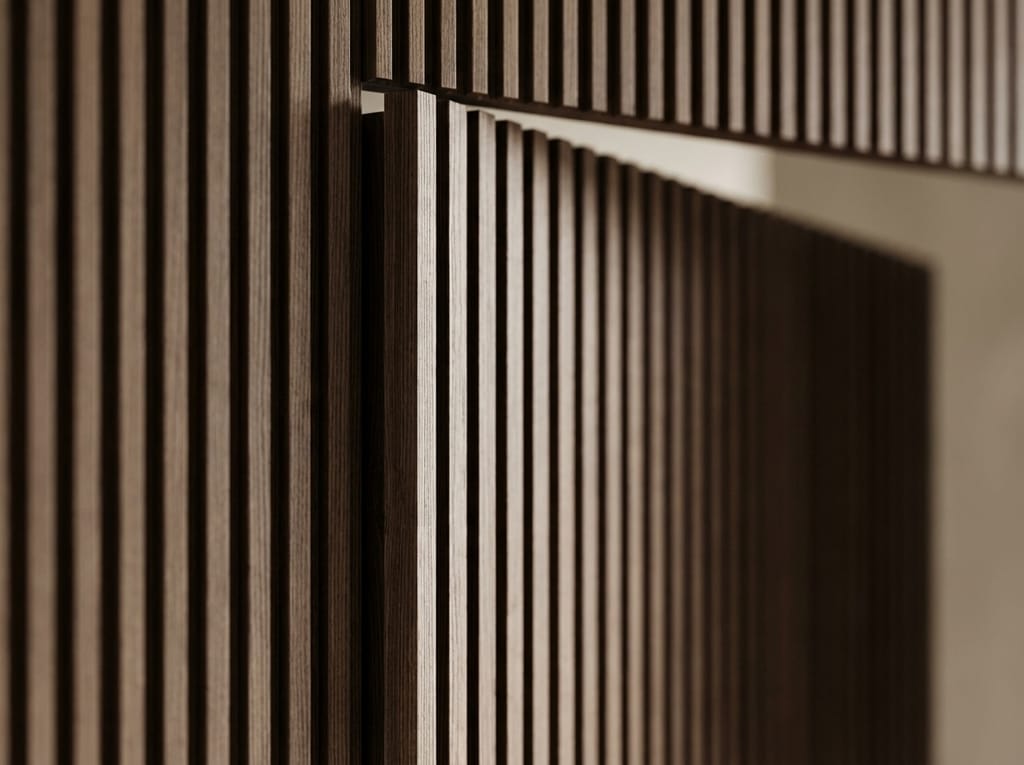
Perfection is measured in millimeters. The conversation shifts from aesthetics to tolerances, where the quality of the joinery determines the success of the illusion.
Spatial Experience: The Redefined Threshold
The phenomenal effect is profound. A corridor is no longer just a conduit for circulation but a gallery of texture and light. A living room wall retains its calming, monolithic presence, free from visual clutter. The act of opening the door becomes a moment of discovery—a 'speakeasy' effect that transforms a mundane transition into a deliberate experience. This redefines the threshold; it is not a void in a wall, but a part of the wall that grants passage. Acoustically, the solid-core construction and tight seals provide a level of sound insulation that enhances the sense of retreat and privacy in the concealed space, be it a home office, a primary suite, or a media room.
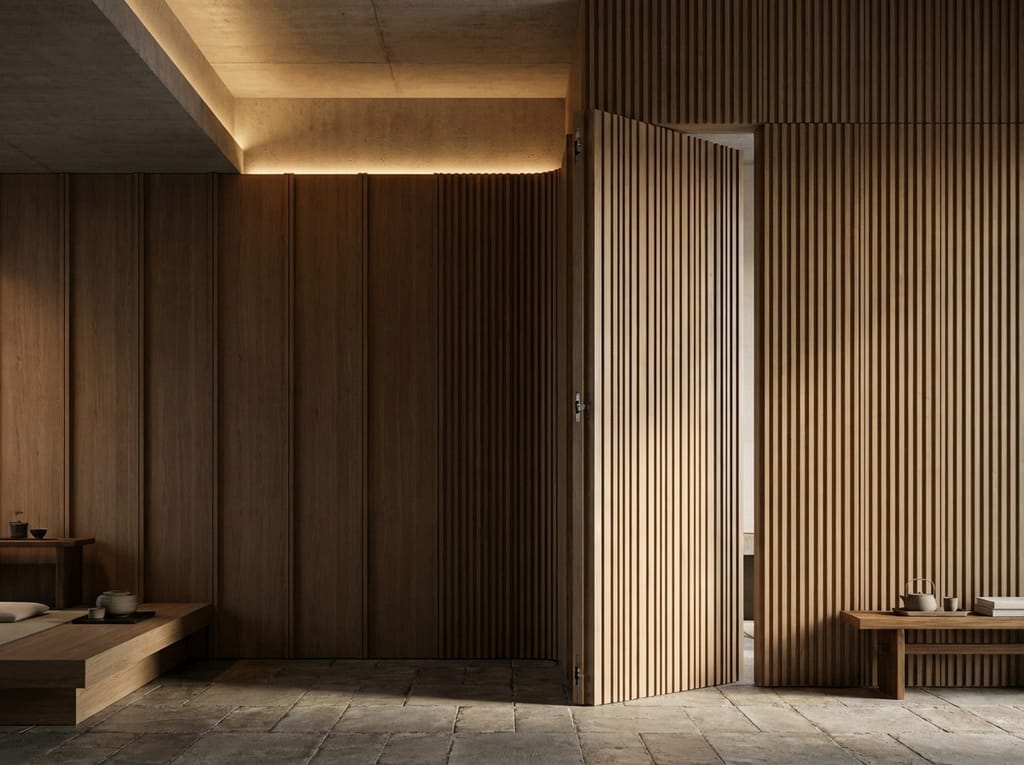
A well-executed jib door doesn't just hide a room; it preserves the sanctity of a surface and the tranquility of the space it defines.
Ultimately, the pursuit of the perfect jib door is a testament to a design philosophy that values substance over spectacle. It is a quiet rebellion against the overt, a commitment to an architecture where the most complex engineering serves the simplest goal: serenity. This is not about hiding a room, but about revealing a deeper understanding of space, where the most profound luxury is the integrity of an uninterrupted line and the quiet confidence of flawless execution.