The Detail Index · Living Space
The Gravity of Darkness: Redefining the Modern Sanctuary
In a region defined by perpetual sunlight, the boldest design statement is not the embrace of light, but the mastery of shadow. We explore a definitive shift from coastal palettes to the profound quiet of moody, architectural interiors.
For decades, the Southern California vernacular has been dictated by a singular narrative: light, bright, and open. But a new philosophy is emerging, one that challenges the primacy of brightness in favor of depth, intimacy, and introspection. This is not a rejection of light, but a more sophisticated manipulation of it. The design thesis posits that darkness, when wielded with intention, can create a more profound sense of sanctuary than boundless white. By treating shadow as a tangible material, we craft spaces that offer a restorative escape from an over-stimulated world, prioritizing psychological comfort over performative openness.
Design Intent
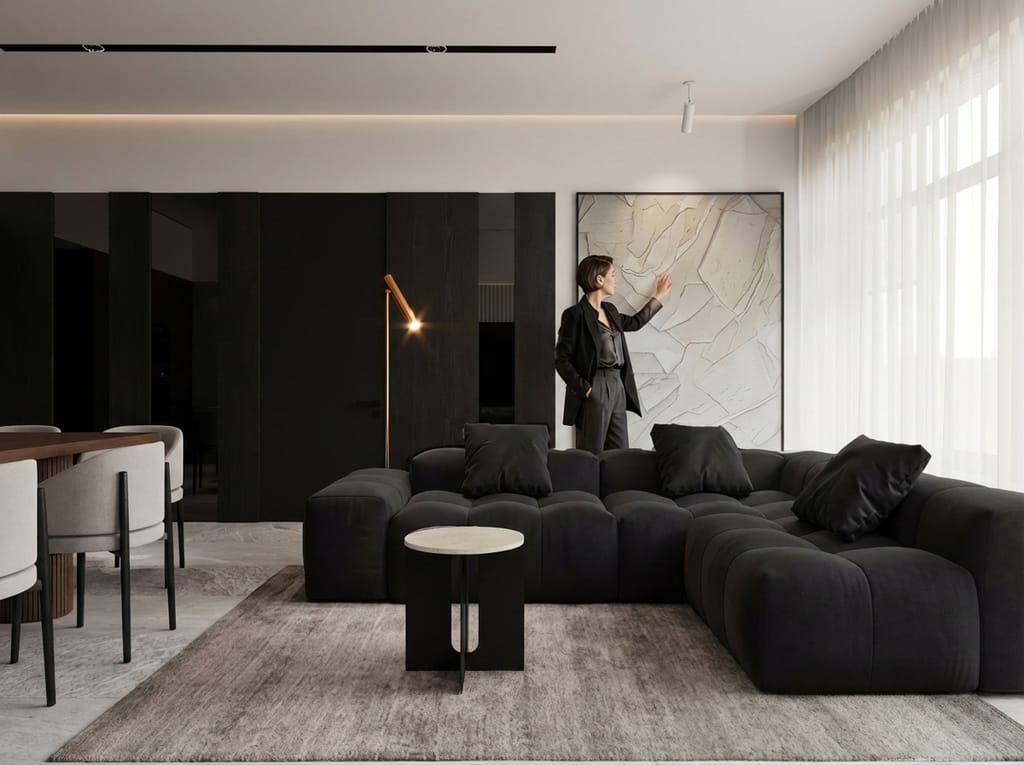
The conceptual framework for this space began with a deliberate inversion of the typical beach house parti. Instead of a design that explodes outward to the view, the intent was to create an inward-facing sanctuary. The client brief called for an atmosphere akin to a private members' club—a space for quiet contemplation and intimate conversation. The core design move was the introduction of a massive, low-profile sectional, not as mere furniture, but as a piece of interior architecture. This singular, dark mass anchors the room's gravity, establishing a psychological hearth that organizes the entire volume and challenges the notion that negative space must be an empty, light-filled void.
We asked, what if 'negative space' wasn't an absence, but a profound presence? Darkness became our primary medium.
Material Palette
The palette is an exercise in monastic richness, built on the subtle interplay of textures that absorb light differently. The walls are clad in expansive, floor-to-ceiling panels of rift-sawn oak with a deep, midnight stain and a dead-flat finish, ensuring no spectral highlights distract the eye. This provides a severe, architectural counterpoint to the deep, tactile velvet of the sectional. A large-scale, rough-hewn art piece introduces an organic, almost Brutalist texture, its chalky surface catching the scant light. The only deliberate warmth comes from a singular, sculptural floor lamp in patinated bronze, its metallic sheen a focal point in the sea of matte surfaces.
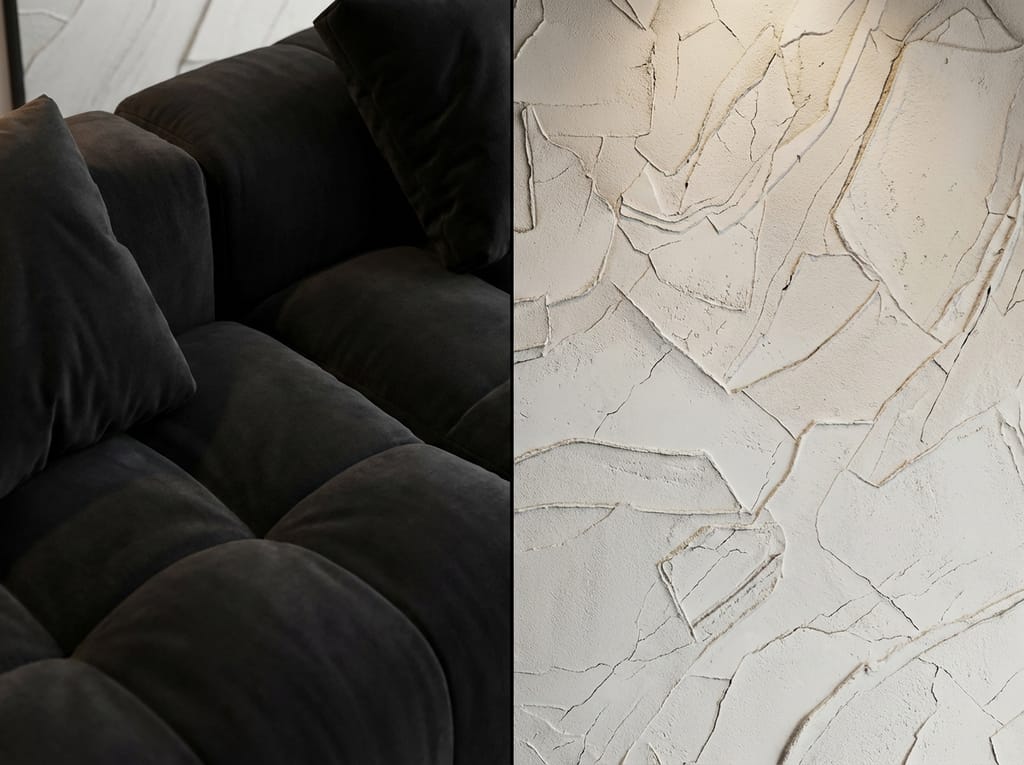
The goal was a layered, tonal darkness. Every surface, from the matte-finished millwork to the velvet upholstery, was chosen for its ability to absorb light and soften sound.
Spatial Experience
Living within this space is a study in contrasts. During the day, the dark interior frames the California sun, turning windows into cinematic apertures and intensifying the vibrancy of the world outside. The space doesn't feel dim, but rather focused. As dusk falls, its character transforms entirely. The single warm light source creates a concentrated pool of intimacy, while the surrounding architectural planes recede into an ambiguous, quiet darkness. The extensive use of soft and matte surfaces results in superior acoustic dampening, creating a hushed environment where conversation is easy and outside noise feels distant. Circulation is naturally directed around the central sofa, reinforcing its role as the gravitational core of the home.
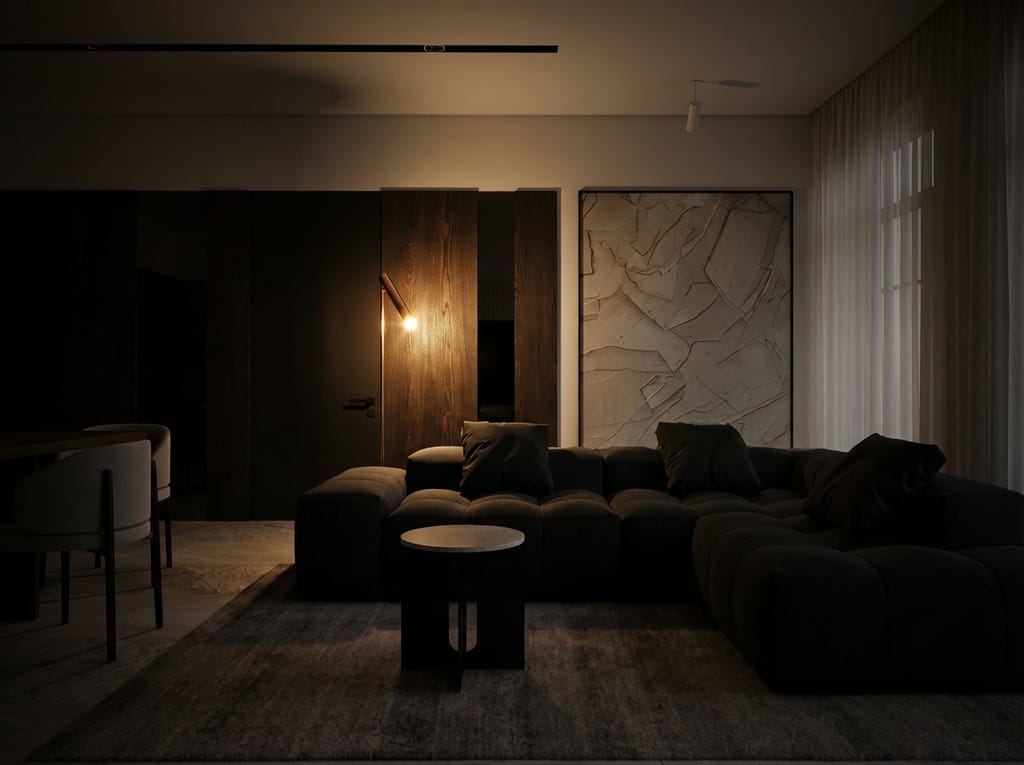
By day, the room is a lens focusing the world outside. By night, it's a sanctuary that holds you in its quiet embrace.
The rise of the moody interior represents more than an aesthetic trend; it reflects a deeper cultural shift in how we seek refuge and comfort within our homes. It marks a departure from spaces designed for outward appearance to those engineered for an inward experience. By embracing the art of shadow, we find that true luxury is not about commanding attention with brightness, but in crafting a personal sanctuary of profound and restorative quiet. This is the new architecture of solace.