The Detail Index · Living Space
The New Anteroom: Architecture's Decompression Chamber
The most overlooked space in residential design is arguably the most critical: the threshold. We explore how the utilitarian mudroom is being reimagined as a sophisticated anteroom, a deliberate pause between the public and private realms.
In luxury residential architecture, the greatest design challenge is often not the grand gesture but the graceful resolution of daily friction. For decades, the mudroom has been a spatial apology—a cluttered, utilitarian drop-zone tucked out of sight. We propose a fundamental re-evaluation. This space is not an afterthought but the home's primary threshold; a crucial 'decompression chamber' that choreographs the transition from the chaotic outer world to the sanctuary within. The design thesis is simple: by applying the same architectural rigor to this space as a primary suite, we can transform the mundane ritual of arrival into a moment of profound calm and order.
Design Intent: The Ritual of Arrival
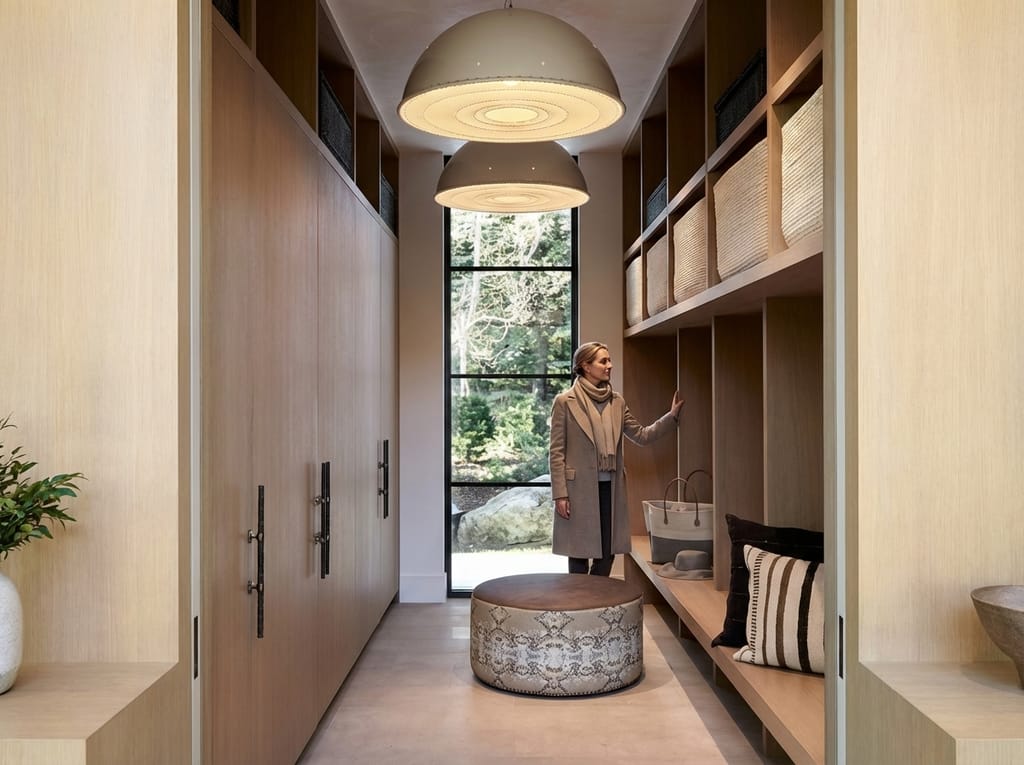
The conceptual framework for this space was to elevate function into ritual. The client's brief centered on creating 'order as the ultimate luxury.' Our parti, therefore, treated the mudroom as a formal anteroom—a buffer that intentionally slows the pace of entry. The core design move is a symmetrical axis defined by floor-to-ceiling white oak casework. On one side, concealed, full-height millwork hides the visual noise of coats, shoes, and equipment. On the other, open shelving provides curated organization, its rhythm establishing a sense of calm. This deliberate opposition of concealed and revealed storage creates a spatial clarity that guides the inhabitant, turning the act of unburdening into a structured, serene process.
The moment you step inside, the chaos of the outside world should simply dissolve.
Material Palette: Tactility and Restraint
Material selection was driven by a desire for warmth, durability, and tactile honesty, reflecting a Japandi-inspired ethos of organic minimalism. We specified rift-sawn white oak for all casework, its tight, vertical grain providing a quiet architectural language that eschews ornamentation. The wood is finished with a hand-rubbed, low-sheen oil, preserving its natural texture and depth. This verticality is grounded by large-format slate flooring, its subtle cleft texture offering a durable, grounding plane underfoot. All joinery is seamless, featuring integrated finger pulls and concealed European hinges. This obsessive attention to detail ensures that the functional infrastructure of the space never compromises its serene aesthetic.
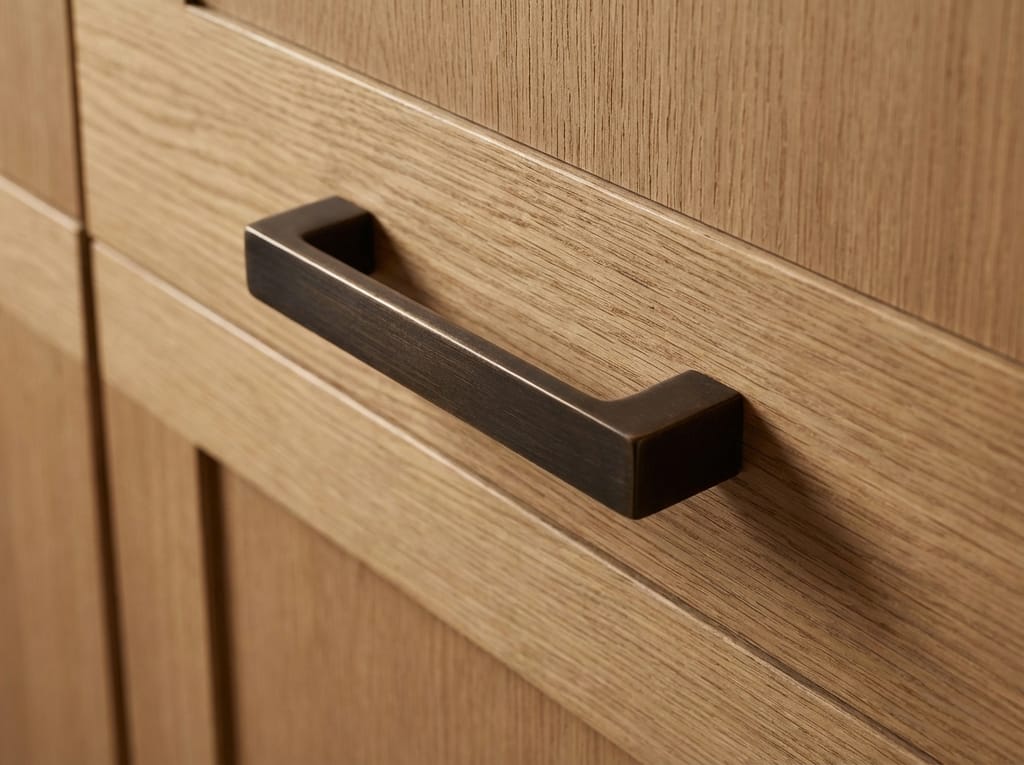
True luxury is the absence of friction in your daily environment.
Spatial Experience: Choreographing Light and Passage
The performance of the space is defined by its relationship to light and circulation. A large, single-pane picture window acts as the room's focal point, framing a view of the garden and establishing a strong biophilic connection. This primary source of fenestration ensures the space is filled with diffuse natural light throughout the day, preventing the feeling of a confined corridor. The circulation path is unambiguous, leading directly into the main artery of the home. By consolidating all storage and function along the walls, the central passage remains clear, creating a sense of release and openness. The high ceilings, coupled with strategically placed architectural lighting, reinforce a feeling of volume and intentionality, ensuring the space feels as significant as it is functional.
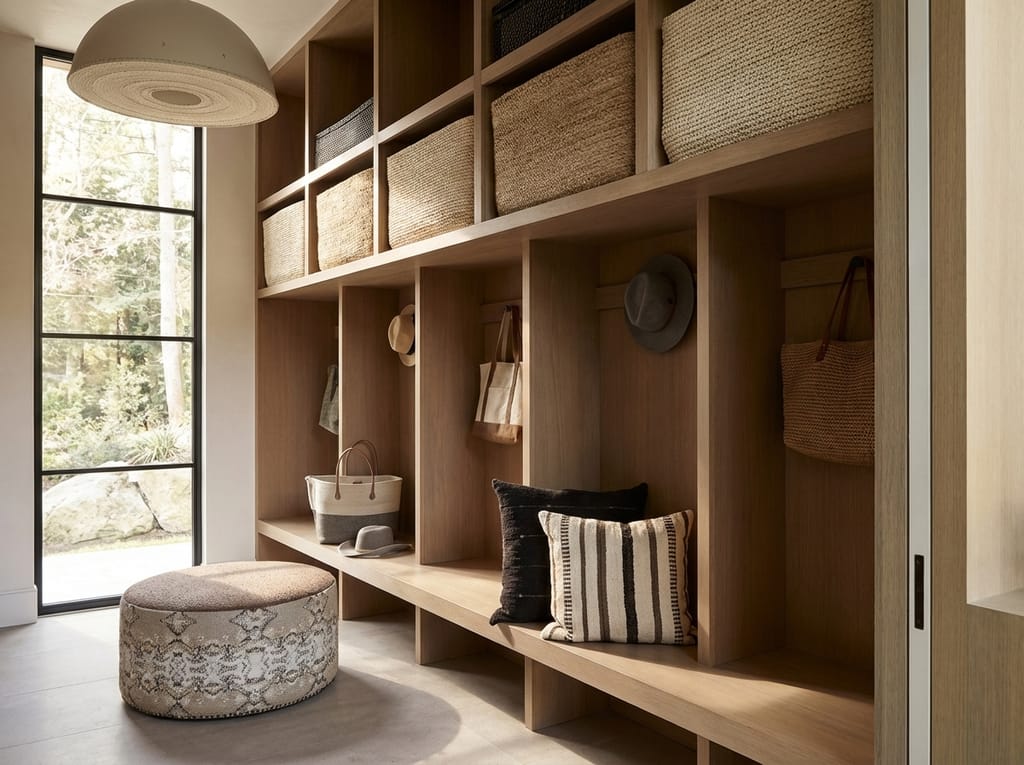
We approach these utilitarian zones with the same design rigor as a formal dining room.
Reimagining the mudroom as a formal anteroom is more than a trend; it is a statement about how we wish to live. It suggests a deeper understanding of home not as a collection of rooms, but as a sequence of experiences. By investing architectural thought into these transitional moments, we acknowledge that the quality of our daily lives is shaped by the seamlessness of our routines. The art of arrival is, ultimately, the art of living with intention—where the first step inside is not an act of clutter, but one of clarity.