Shadow Play: The Architectural Logic of the Noir Kitchen
In a landscape defined by unrelenting sun, we find a counter-narrative: a kitchen designed not for the glare of day, but for the intimacy of evening. This is a deliberate turn towards shadow, texture, and atmospheric depth.
The prevailing design dialect in the Southwest speaks of light, airiness, and a seamless bleed between interior and exterior. But this vocabulary often fails to capture the nuance of modern domesticity. The design thesis for this Scottsdale residence challenges that convention, proposing an 'evening home'—a space optimized for sophisticated entertaining and quiet intimacy. We pivoted from the expected to solve a modern spatial problem: how to create a sanctuary that feels as compelling at 8 PM as it does at 8 AM. The driving idea is a redefinition of luxury, moving away from sheer volume and towards the profound impact of material honesty and atmospheric control.
The Case for an 'Evening Home'
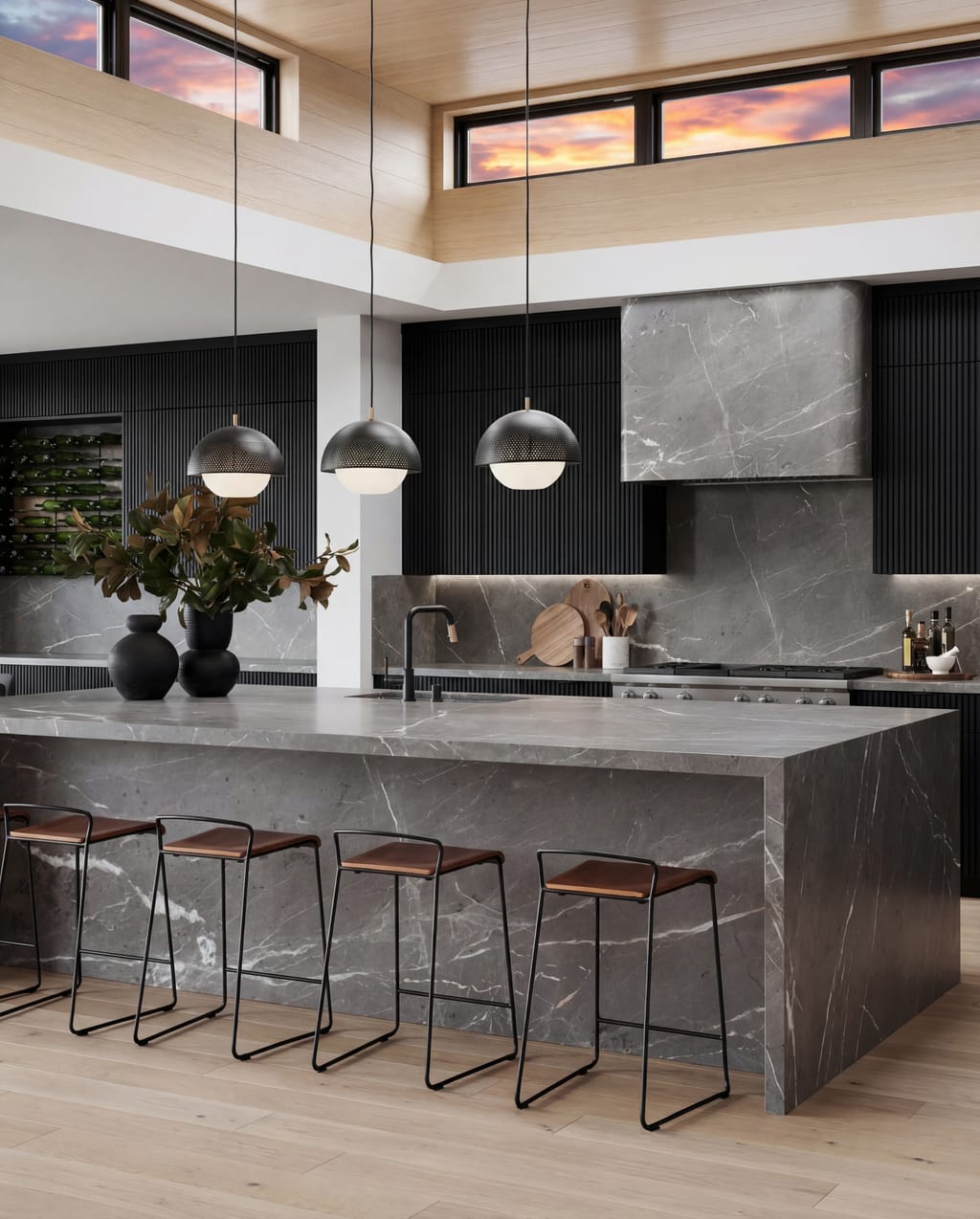
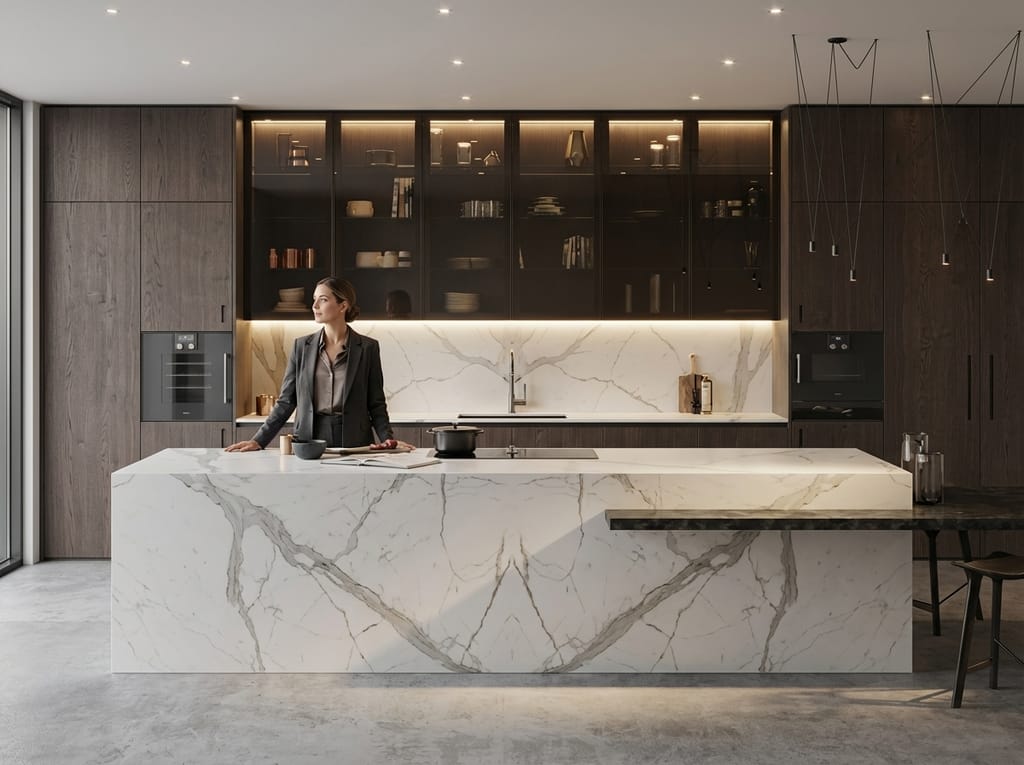
The conceptual framework began with a rejection of the all-purpose, perpetually bright living space. The client brief called for an environment that could transform, offering a different character after dark. Our parti centered on creating a zone of atmospheric compression within an otherwise open plan. By employing floor-to-ceiling dark timber casework, we established a strong spatial boundary that cocoons the user. This isn't about isolation, but about a curated sense of enclosure. The organization is anchored by a monolithic island, a gravitational center that dictates circulation and encourages gathering, turning the kitchen from a purely utilitarian zone into a sophisticated social core.
We asked: what if a home performed best after sunset? This simple question inverted the entire design process.
A Dialogue of Darkness and Light
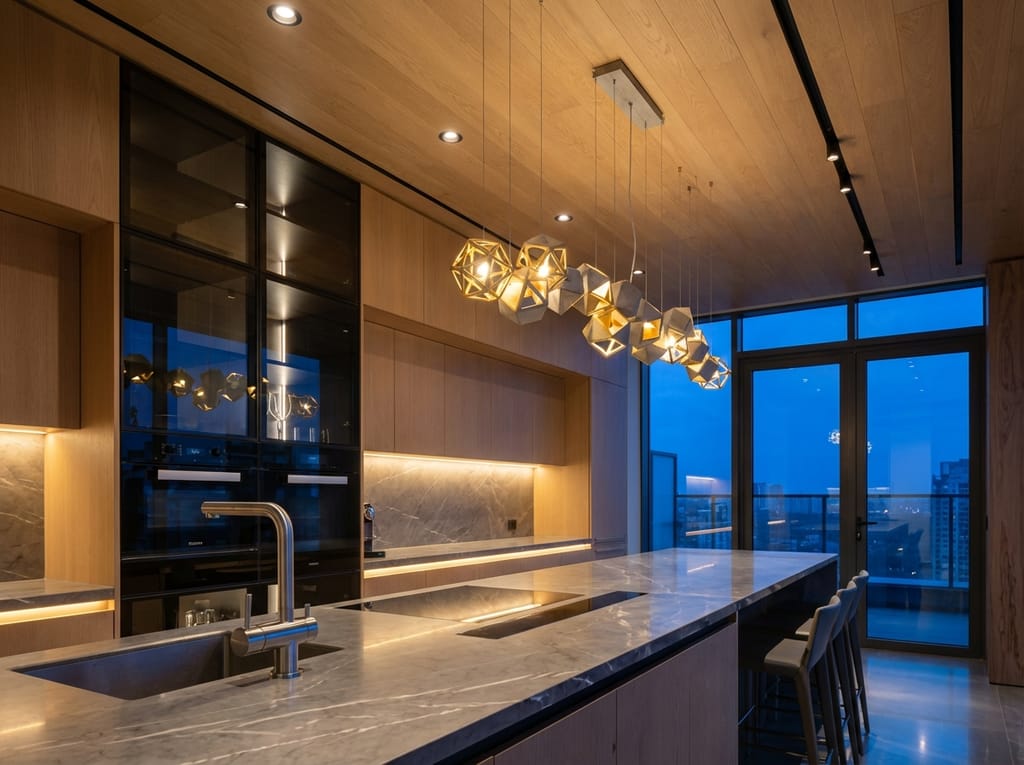
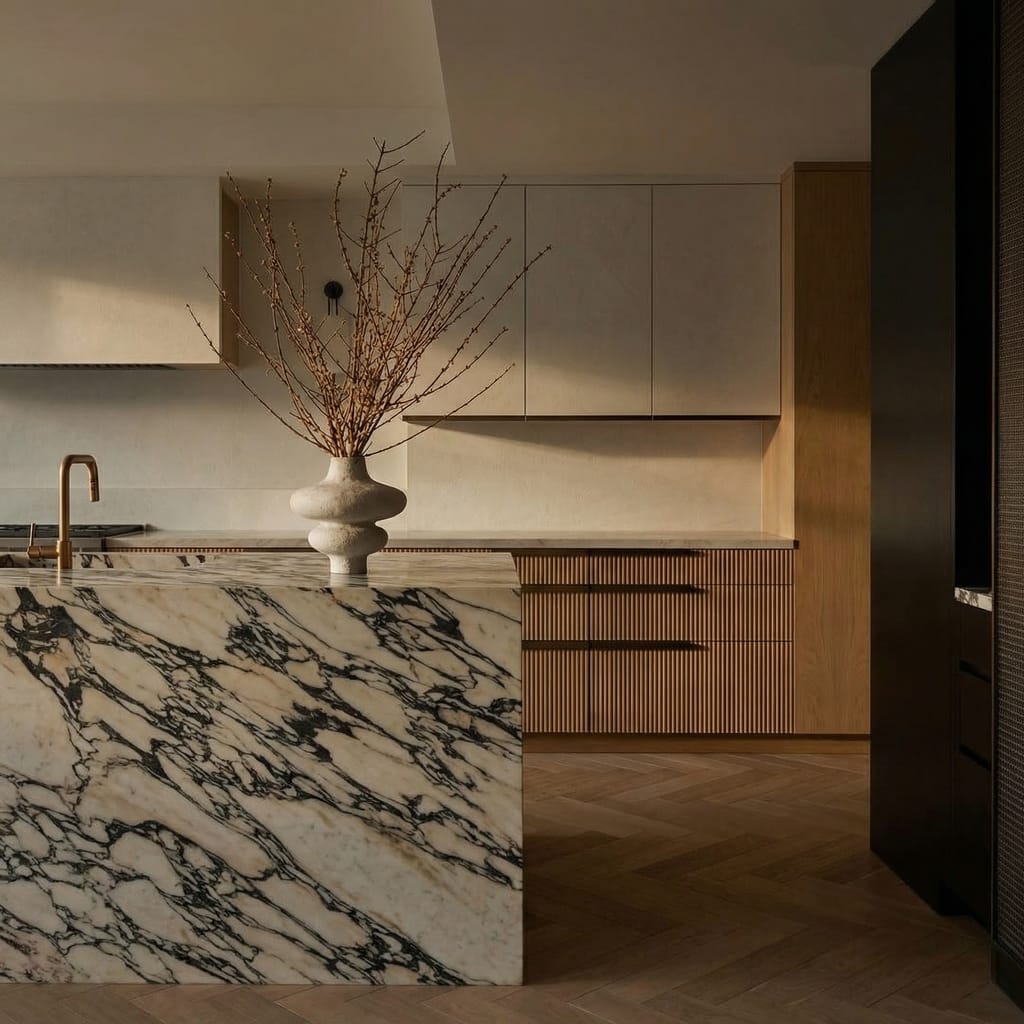
The material palette is a study in controlled contrast. We specified rift-cut oak, fumed to a deep, near-black tone, for all vertical casework. The grain remains perceptible, lending organic texture that prevents the surfaces from feeling monolithic or inert. This darkness is cleaved by the island, fabricated from a single slab of book-matched Calacatta Viola marble whose dramatic veining reads like a geological event. The upper cabinets introduce a third element: smoked glass fronts with integrated, warm-dim LED channels. This turns storage into a luminous display—a 'jewelry box' effect where the lighting is not an afterthought but a primary material that sculpts the shadows.
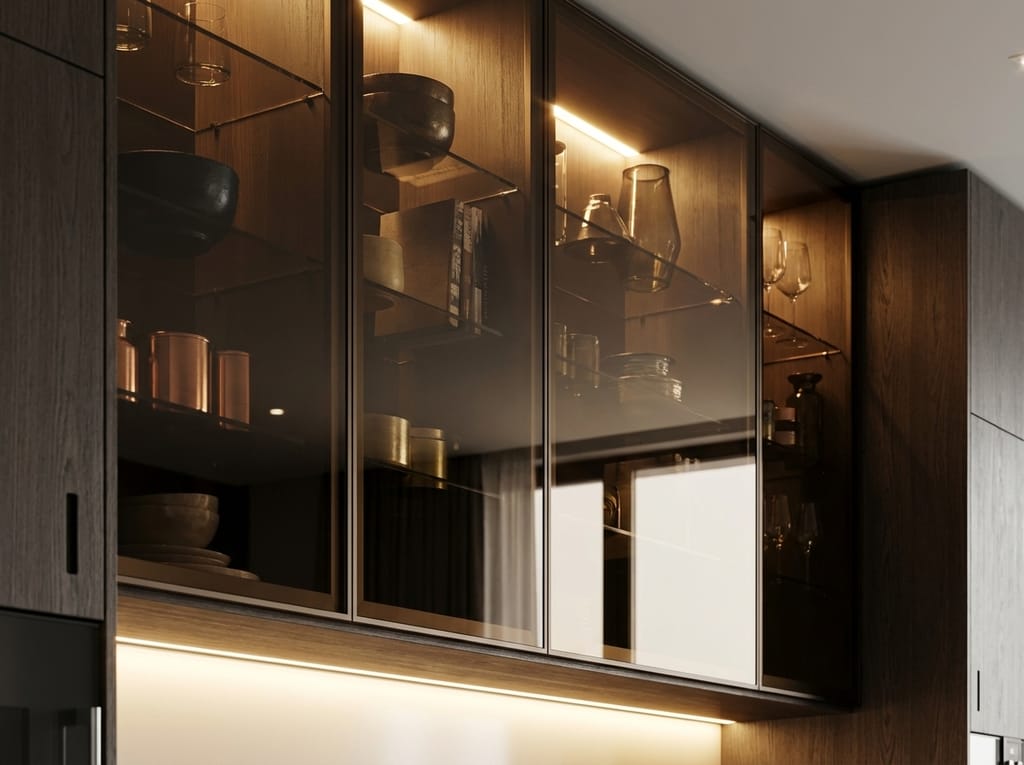
The luxury here is not in the material itself, but in the millimetric precision of its assembly and the integrity of its finish.
Atmosphere as Architecture
The performance of the space is entirely orchestrated by light. During the day, the dark surfaces absorb the harsh desert sun, reducing glare and creating a calm, grounded interior. Sightlines are intentionally directed toward the dramatic stone and the view beyond. But as evening descends, the architecture transforms. The integrated lighting scheme allows for precise tuning of the atmosphere, from bright task lighting for meal preparation to a low, warm glow that makes the stone island appear to float. This strategic illumination enhances the tactile quality of the fumed oak and casts reflections in the smoked glass, creating a layered, dynamic experience. The result is a space that breathes with the rhythm of the day.
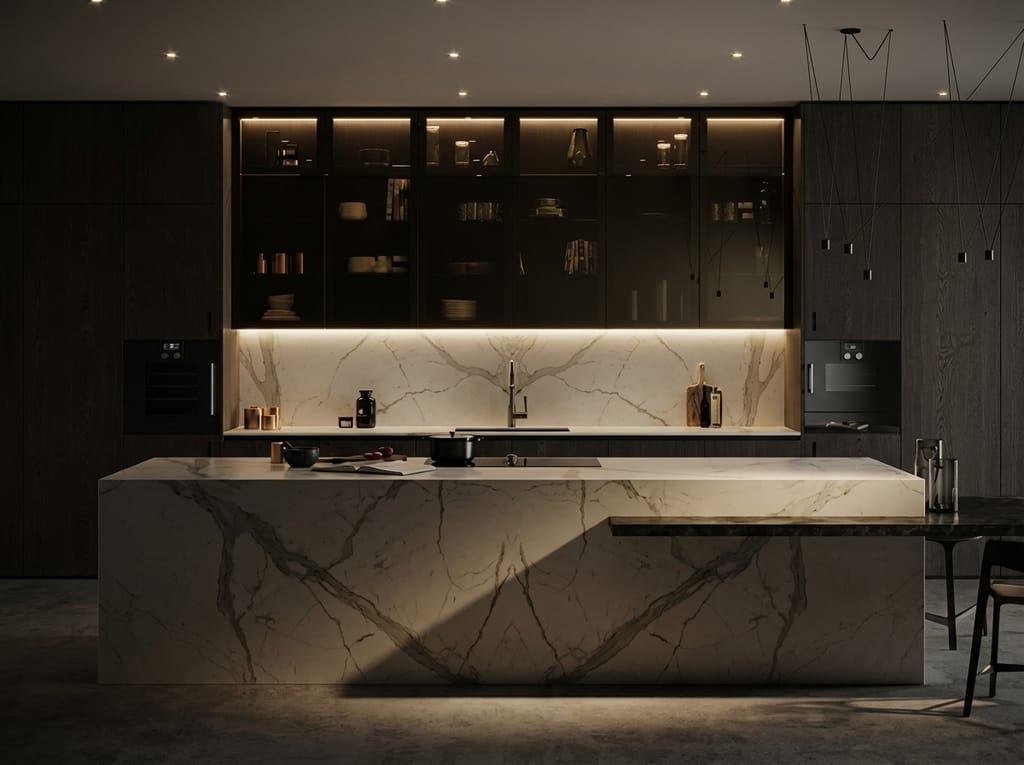
The space doesn't just get darker at night; it becomes richer, deeper, and profoundly more intimate.
The noir kitchen is more than an aesthetic choice; it is an architectural response to a cultural shift. As our lives become increasingly digital and exposed, the home reasserts itself as a place of retreat and genuine connection. By embracing darker, moodier palettes, we design for specific emotional outcomes—serenity, intimacy, and focus. This project is a testament to the principles of 'Quiet Luxury,' where value is expressed through bespoke craftsmanship and a deeply considered spatial experience, proving that the most profound statements are often whispered, not shouted.